Precision Haircuts · Vancouver
Precision Haircuts in Vancouver, Cut for Your Hair Type
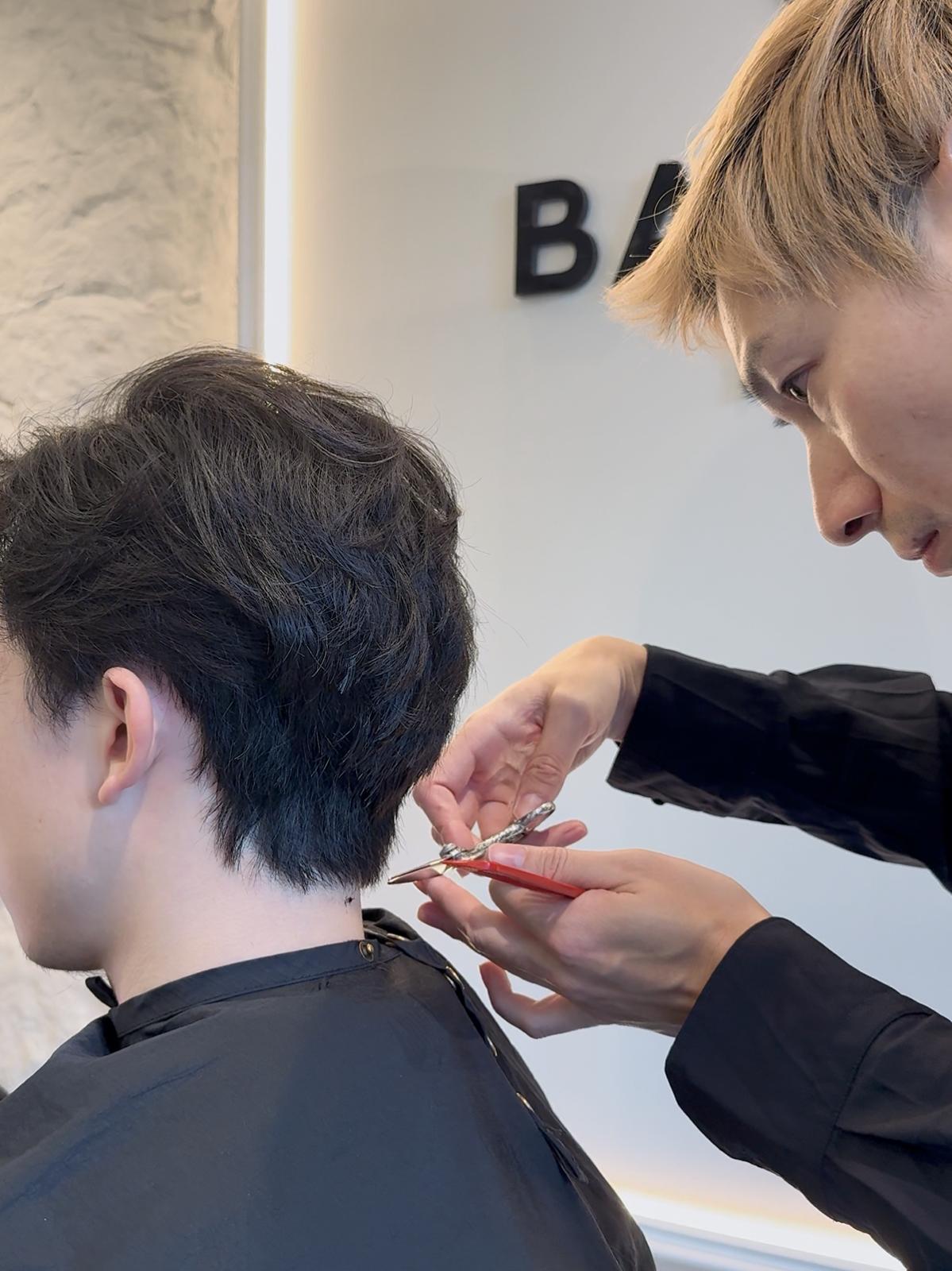
Fine hair that falls flat, thick hair that puffs out, straight hair that sticks up after a cut: most bad haircuts are a good style cut for the wrong hair. At Salon Era in Fairview, master stylist Ken Hung starts every cut by reading your hair, then shapes the cut around it.
Below: how we cut fine, thick, coarse and straight East Asian hair, which bob, layers or length suits each, men’s cuts, and what a haircut costs.
In Short
The Right Cut for Your Hair Type
- Fine or thin hair
- A blunt, solid perimeter and very few layers, so the hair keeps its weight and reads fuller.
- Thick or coarse hair
- Weight taken out from the inside, never by thinning the roots, so it sits down without a shelf or frizz.
- Straight East Asian hair
- Enough length where the hair would spring up, and a final check on dry hair, so short layers don’t flip.
- Low maintenance
- A precise line that grows out evenly, so the shape still works six to eight weeks later.
Fine & Thin Hair
What haircut makes fine hair look fuller?
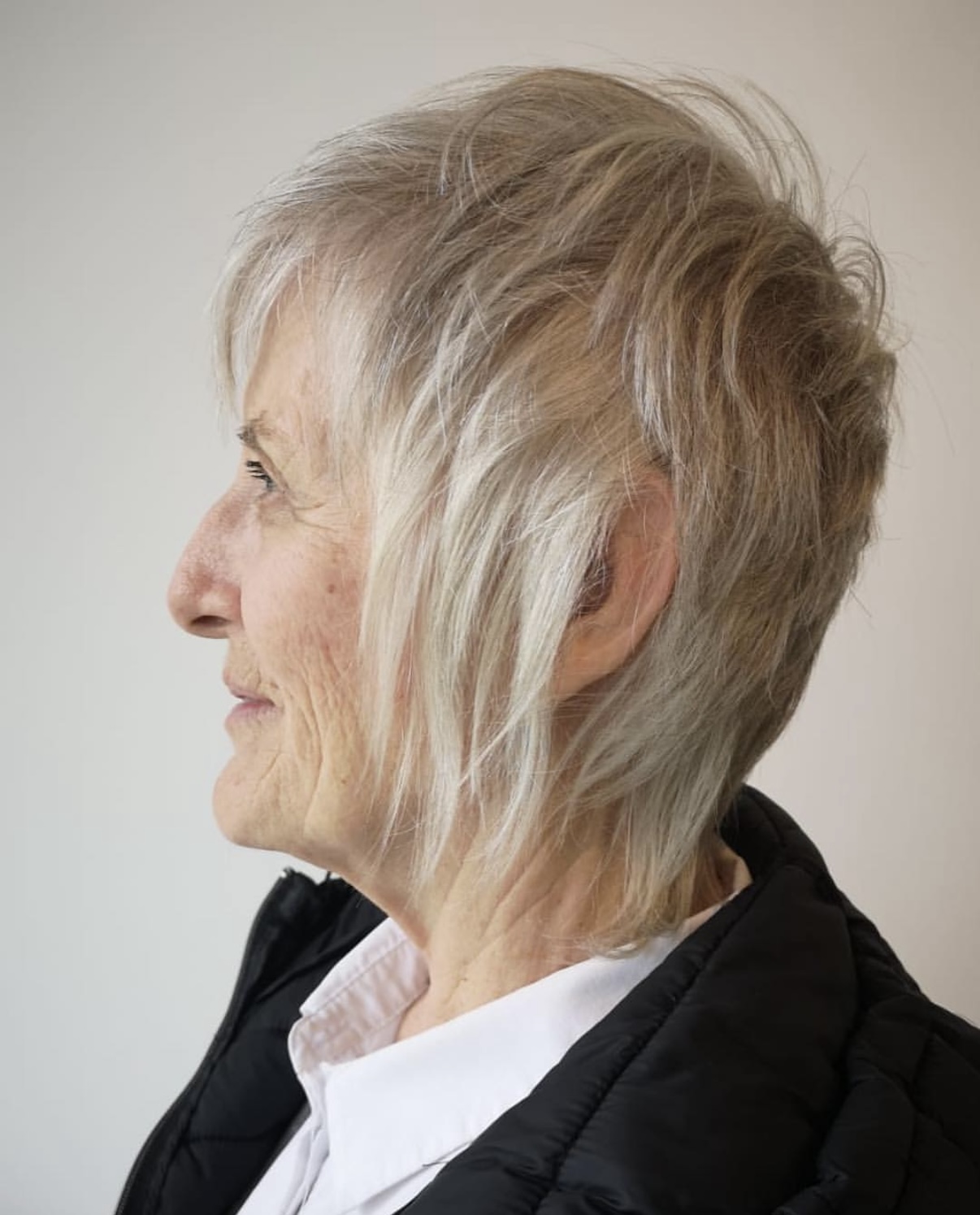
A cut that keeps its weight at the ends. Fine hair gets its body from the perimeter, so a blunt, solid line, with only minimal or hidden layers, makes it look thicker. Heavy layering, thinning shears and razor-cut ends take away the little bulk fine hair has, and it collapses.
- Fine is not thin. Fine means narrow strands; thin means fewer of them. Many clients have both, and the cut changes with each.
- Movement without losing body. Point cutting softens a blunt edge; a few internal layers add movement where you need it.
- Wave changes the rules. Wavy fine hair can carry more layers than straight fine hair.
Ken has written a full guide in his own words: Fine Hair Isn’t the Problem, the Cut Is →
Thick & Coarse Hair
How do you cut thick or coarse hair without frizz?
By removing weight from the inside rather than thinning the whole head. Internal layers, slide cutting and point cutting take bulk out where it builds up, so the hair sits closer to the head while the outline stays smooth. Over-thinning does the opposite: it leaves short pieces that stand up and frizz.
- Coarse is not thick. Coarse means wide strands; thick means many of them. Density usually decides how much weight comes out.
- No shelf. Weight is blended so there is no hard step where the layers end, which shows most on shorter cuts.
- Never at the root. Thinning near the scalp, especially at the crown, creates short hairs that push the rest up.
Thick hair that is also frizzy may benefit from a keratin smoothing treatment after the cut.
Straight East Asian Hair
Why does straight Asian hair stick out after a haircut?
Usually because it was cut too short in the wrong places. On average, East Asian hair has wider, rounder and stiffer strands than European hair, so short layers, especially at the crown and the fringe, push outward instead of lying down. The fix is to leave enough length where the hair wants to spring up, and to check the cut dry.
A 2020 dermatology review of hair structure found East Asian hair has, on average, the largest cross-section and the highest hardness and stiffness of the groups studied, while European hair had the highest density (Clinical, Cosmetic and Investigational Dermatology). Averages are not people: every head is read on its own.
- Crown and fringe first. Whorls and cowlicks keep extra length so the weight holds them down.
- Bulk out, not length off. Dense sides are de-bulked from the inside, so they stop flaring without going short.
- Checked dry. Straight hair hides nothing: any uneven line shows once it is dry, so that is where the cut is finished.
For soft, Korean-inspired layers that suit straight hair, see Amika’s guide to Korean hair trends in Vancouver.
Bob, Layers, Long or Short
Which haircut suits your hair type?
The same style is cut differently on different hair. Ken’s starting points, which he adjusts in the chair:
Bob
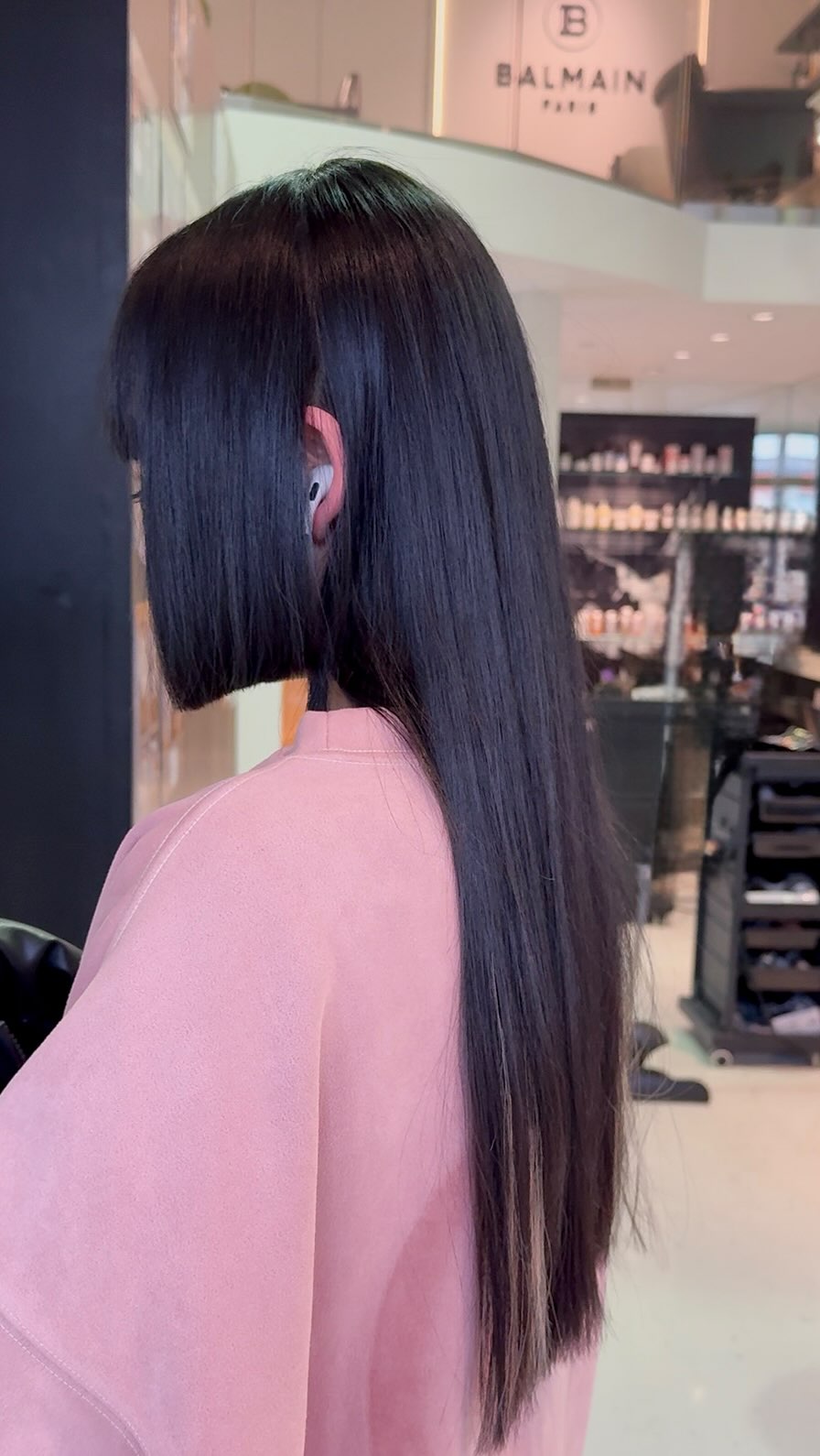
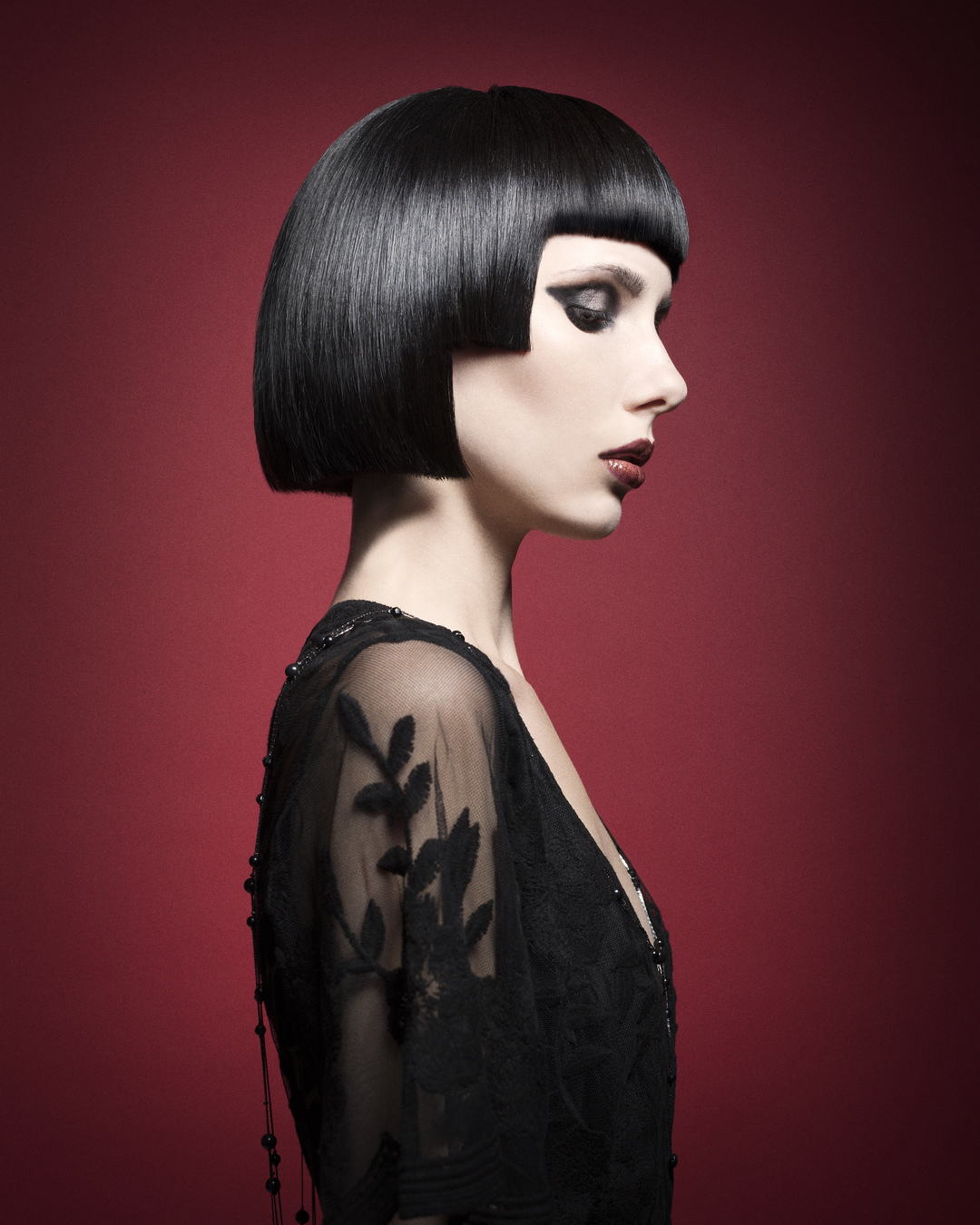
On fine hair, a one-length, blunt bob looks thickest. On thick hair, a graduated or A-line bob takes weight out at the nape so it doesn’t turn triangular. A precise bob keeps its line as it grows.
Layered cuts
Layers suit thick and wavy hair best. On fine or very straight hair they are kept long and few, placed where they add movement rather than everywhere.
Long hair
The ends do the work. Keeping them full and even matters more than layers, and a few face-framing pieces give shape without thinning the length.
Short hair
Short cuts depend on growth patterns. Ken maps the crown and nape before cutting so the shape sits flat, and checks it dry.
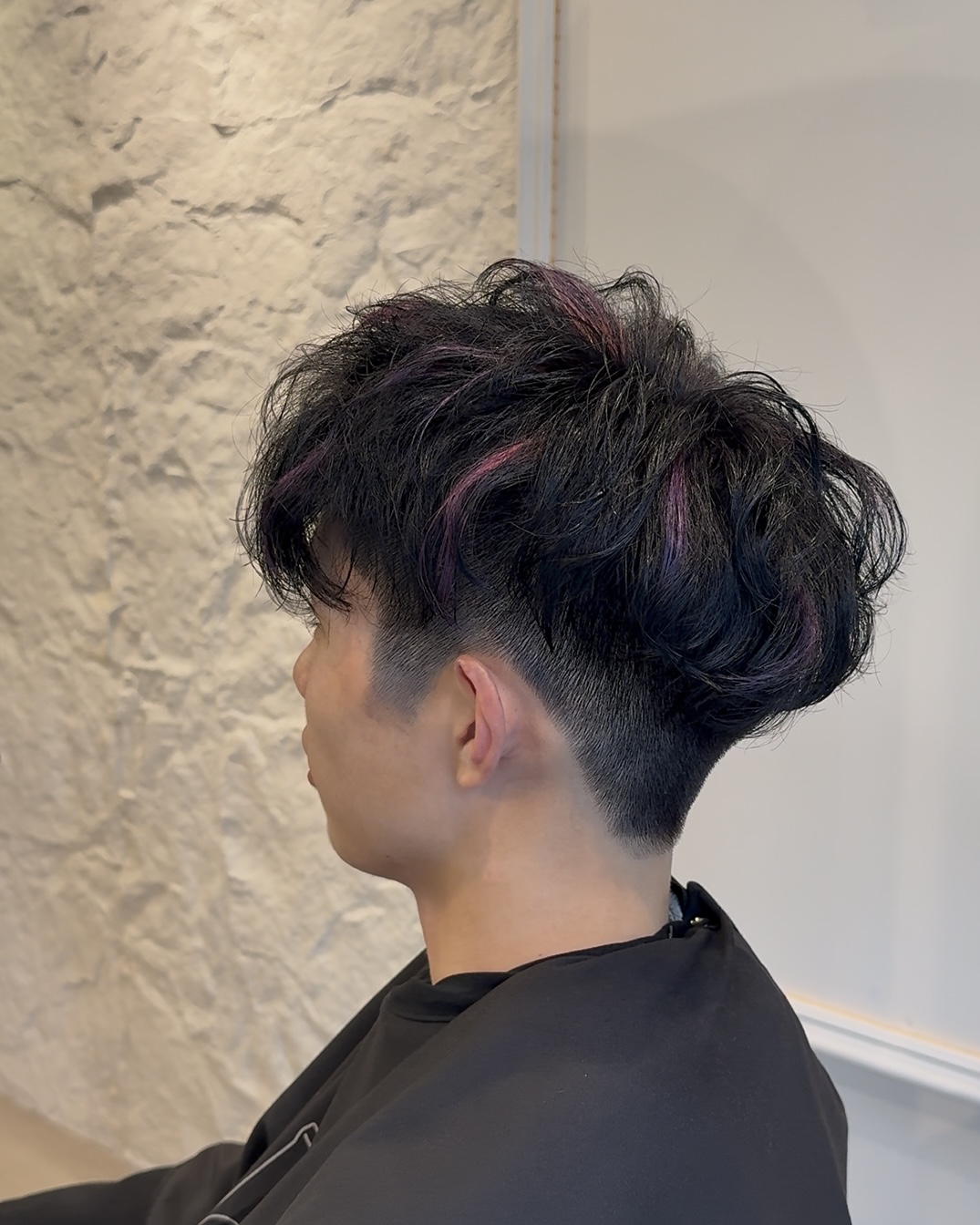
Men’s Haircuts
What is the best men’s haircut for your hair type?
One that works with how your hair grows. Fine hair that is thinning at the crown looks fuller with a solid, slightly longer top and no airy, over-thinned ends. Thick, straight hair that stands up at the sides needs its bulk removed from the inside, not just a shorter clipper guard. Cowlicks keep a little length so they lie down.
A men’s haircut is $70 with Amika and $120 with Ken.
Face Shape & Low Maintenance
What is a low-maintenance haircut that grows out well?
A precise cut built for your hair type. When the line is balanced and the weight sits in the right place, the shape still works weeks later, so you style it in minutes and come back on schedule, not in a hurry.
Face shape guides the details: where a fringe starts, how long face-framing pieces fall, where the volume sits. It works together with your hair type, not instead of it: the most flattering line does nothing if your hair can’t hold it.
How We Cut
Four Steps in Every Appointment
- 1
Read your hair first
Diameter, density, wave, and where it grows: crown whorls, a cowlick at the fringe. These decide the cut more than the photo you bring.
- 2
Plan the line
Where the weight should sit, how long each area must stay to lie flat, and how the shape will look in six weeks.
- 3
Cut with precision
Clean sections, the right elevation and light, even tension, cut to the way your hair actually falls.
- 4
Check it dry
Growth patterns show on dry hair. The cut is refined dry, and you leave knowing how to style it at home.
Prices
Haircut Prices at Salon Era
Amika · Senior Stylist
- Women
- $80
- Men
- $70
Ken · Master Stylist
- Women
- $150
- Men
- $120
Children under age 11 receive a $10 discount. Your price follows the stylist you book with. Not sure who to choose? Call us and we'll match you. All services and prices →
FAQ
Haircut Questions, Answered
What is the difference between fine hair and thin hair?
Should fine hair have layers?
Will a haircut make my hair grow thicker?
How often should I get a haircut?
How much does a haircut cost at Salon Era?
Do you cut men’s hair?
Should I book Ken or Amika?
Book a Haircut Made for Your Hair
Salon Era is at 511 W 7th Ave #113, Vancouver, BC V5Z 4R2, in Fairview near False Creek. Book online or call 604-210-5006.