Stylist Spotlight
Think It’s a Hair Problem? Twenty-Six Years Behind the Chair Taught Me It Starts at Your Scalp
Ken Hung Founder & Master Stylist · Salon Era Vancouver
You sit down, and you start telling me about your hair. It’s thinner than it used to be. It looks dull. It grows so slowly. It never quite feels clean. I have been hearing some version of this almost every day for twenty-six years, from my training at the Vidal Sassoon Academy in London to my own chair at Salon Era, and somewhere along the way I learned to listen for the part nobody says out loud.
Because that conversation almost never ends where it starts. It ends at your scalp.
Here’s the picture I keep coming back to. Your scalp is the soil, and your hair is what grows out of it. You can buy the loveliest conditioner on the shelf and layer on serums and masks, but if the soil underneath is tired, the plant struggles anyway. Nothing you do on the surface fixes a problem at the root. Once that lands, the way you look after your hair changes for good.
“Whatever you want from your hair — shine, strength, thickness — it starts with what’s happening underneath. The scalp is the soil.”
What Scalp Health Actually Means
Scalp health is the condition of the skin your hair grows out of: whether the follicle openings are clear, whether the moisture barrier is intact, and whether blood is reaching the root properly. It’s skin, and it behaves like skin. It just happens to be the only skin on your body with something growing through it.
That last part is why it matters so much. Every strand you have spends its whole life being built inside a follicle. Whatever conditions exist down there get written into the hair before you ever see it. By the time a strand is long enough to hold, the decisions have already been made.
Which is also why the shelf of products in your bathroom can only do so much. Conditioner, oil, masks and serums all work on hair that has already grown. They can make it softer and shinier, and I recommend them all the time. They cannot change what happens next at the root.
Those “Small” Problems Are Usually One Signal
An itch that keeps coming back. Roots that feel oily by mid-afternoon. A faint smell that returns no matter what you wash with. Flakes that change with the seasons. Ponytails that feel thinner than they did.
Most people file each of these separately — something to manage, put up with, or shampoo around. I read them differently. They’re almost always the same message arriving in five different envelopes: a scalp that has been pushed out of balance and is asking, quietly, for some attention.
Ask yourself honestly whether any of these sound like you:
- Your roots are oily within a day of washing, but your ends still feel dry
- You itch again within hours of getting out of the shower
- Your flakes look different in winter than they do in summer
- Your parting looks a little wider in photos than you remember
- You’ve changed shampoo three times this year and nothing really stuck
If you recognised two or more, this guide was written for you. Not to sell you a bottle of anything, but to explain what I wish everyone knew before they spent another year guessing.
“A haircut you love is only half of it. The other half is hair healthy enough to carry it, and that half always begins at the scalp.”
The Root Causes
What’s Actually Throwing Your Scalp Off
Four everyday culprits come up far more often than anything exotic.
Buildup You Never Feel Happening
Vancouver’s air is kinder than most big cities, but fine dust still settles on your scalp and gathers around the follicle openings. It adds up invisibly, a little each day. That’s exactly why nobody notices until the scalp starts complaining.
Stress — Genuinely the Biggest One
Long stretches of stress shift your hormone balance, and your scalp answers by making more oil than it needs. That clogs follicles and invites irritation. If your scalp always acts up during your busiest months, that isn’t bad luck. There’s a real, physical reason for it.
Washing Too Little, or Too Hard
Both extremes backfire, in opposite directions. Wash too rarely and oil and dead skin block the pores. Scrub daily with a harsh clarifying shampoo and you strip the barrier your scalp depends on, so it defends itself by making even more oil. One habit leaves you greasy, the other leaves you reactive.
Leftovers From Colour and Perms
Colouring, lightening and perming are all perfectly safe when they’re done properly. The trouble is what’s left behind afterwards: residue that builds up between appointments when the scalp isn’t cleansed and looked after. Over months it irritates the follicle, and it gets blamed on a ‘sensitive scalp’ that was never actually sensitive.
What a Healthy Scalp Actually Looks Like
At Salon Era, every scalp treatment starts with a magnified analysis, and that first look at the screen is almost always a surprise. Here are the three things I’m looking for.
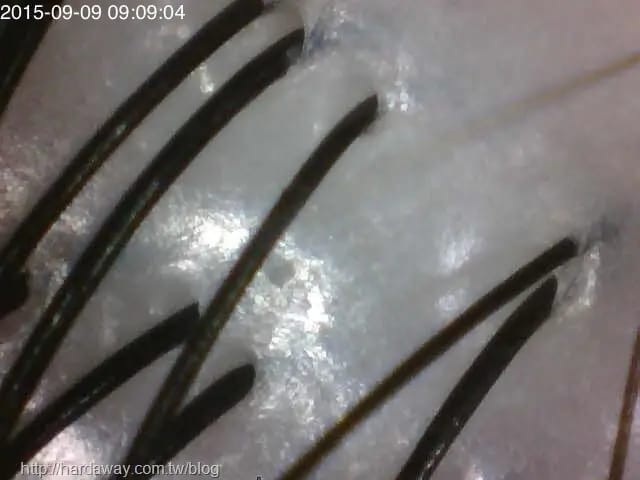
- Clean, open follicle openings — no crust of buildup around the rim, so each follicle can breathe and take in what it’s sent.
- A smooth surface with a soft sheen — a little like the surface of fresh jelly. That glow means the moisture barrier is intact and doing its job.
- Two to three hairs from each follicle — a quiet, reliable sign that the follicles are dense, nourished and working at full strength.
When people see their own scalp on screen for the first time, some are relieved, plenty are surprised, and a few are genuinely startled. But everybody leaves knowing something they didn’t know before, and that changes how they look after their hair far more than any product recommendation from me ever could.
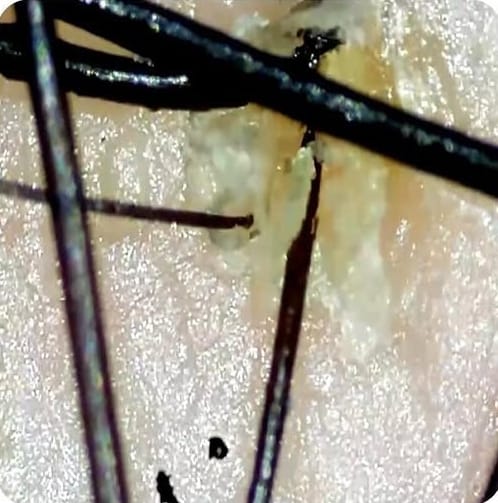
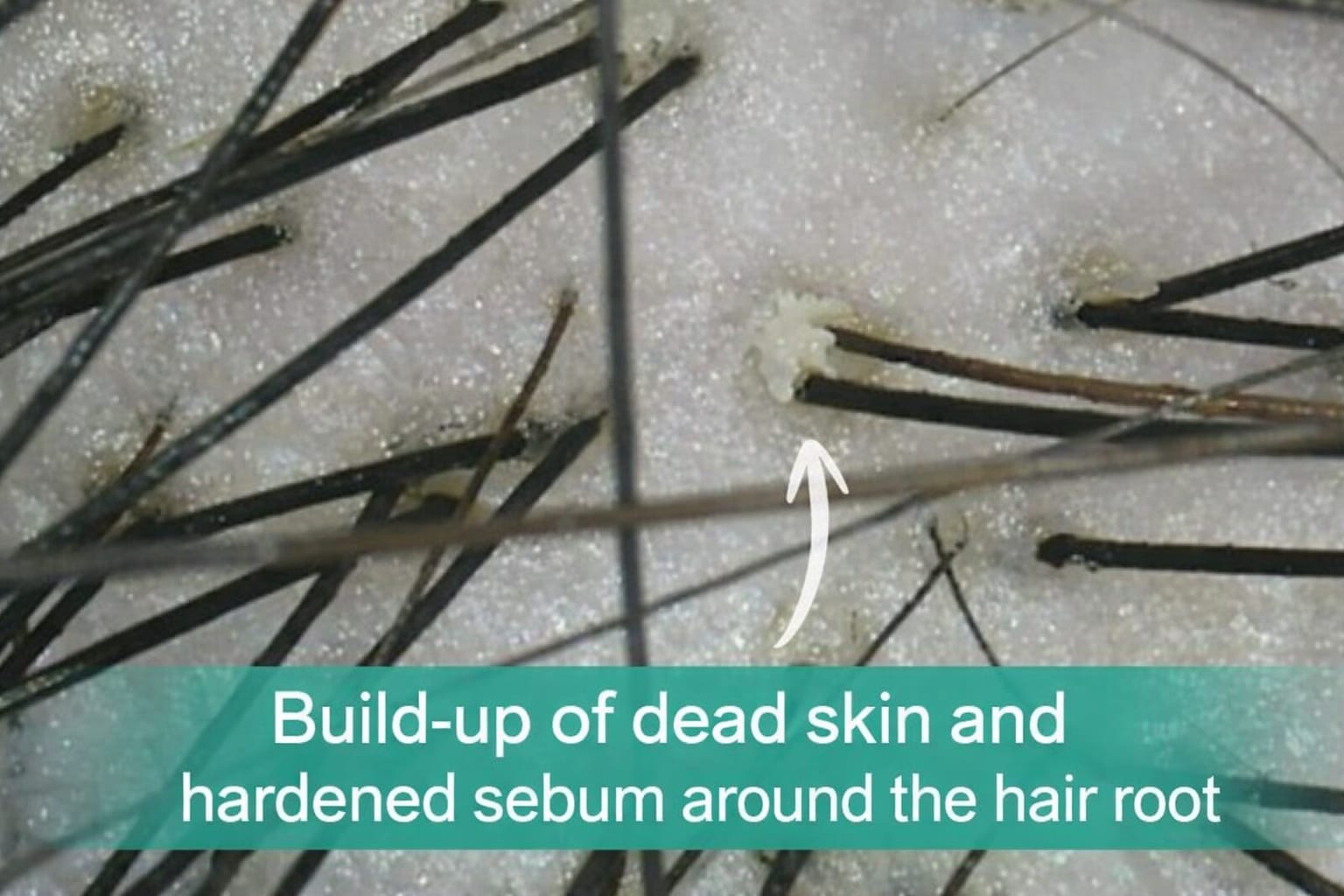
What Happens When Follicles Get Blocked
When dead skin and hardened sebum settle around a follicle opening, a slow chain reaction starts. Slow enough that most people only join the dots years later, looking at an old photo.
Nourishment stops reaching the root efficiently. Every follicle depends on a steady supply of oxygen and nutrients arriving through tiny blood vessels. A blocked opening compromises that supply at the very first step.
Circulation around the follicle weakens. Less circulation means less arriving at the root, and the hair that follicle is building starts to show the shortfall.
Over time: finer strands, slower regrowth, more shedding. The change is gradual, which is exactly why it gets waved away as “just getting older” instead of treated as something you could actually do something about.
I want to be careful with this part, and I’ll say it more than once: not all thinning is a scalp problem, and a salon is not the place for a diagnosis. Hair loss has many causes, some medical, some genetic, and those belong with a doctor. But for the many people with gradual, unexplained thinning who’ve been told nothing is clinically wrong, taking scalp health seriously has made a visible difference more often than not.
Tell Them Apart
Dry Dandruff and Oily Dandruff Are Opposite Problems
They look similar in the mirror and need opposite care. This is the single most useful thing on this page.
Dry dandruff
- Looks like
- Fine, white, powdery. Scatters onto your shoulders.
- Comes from
- A scalp short on moisture, often with a worn-down barrier.
- Worst when
- Winter, indoor heating, after harsh clarifying shampoo.
- What helps
- Gentler washing, less frequent stripping, rebuilding moisture.
- What makes it worse
- Anti-oil and deep-cleansing formulas. They are aimed at the opposite problem.
Oily dandruff
- Looks like
- Yellowish, larger, slightly greasy. Clumps and sticks to the scalp.
- Comes from
- Excess sebum, often with buildup around the follicle.
- Worst when
- Stressful months, humid weather, long gaps between washes.
- What helps
- Proper cleansing of the scalp itself, and a thorough rinse.
- What makes it worse
- Rich moisturising and oil treatments applied to the roots.
Treat the wrong one with the wrong product and it doesn’t simply fail to help. It usually makes things visibly worse within a couple of weeks.
Your Scalp Ages Faster Than Your Face. Much Faster.
Here’s the one that stops almost everybody mid-sentence:
6× Faster
The scalp ages roughly 6 times faster than the skin on your face, and about 12 times faster than the skin on your body.
Think about what we give our faces: serums, SPF, masks, a shelf of small expensive jars, a whole evening routine. And the skin on top of our heads, ageing six times faster, gets a quick shampoo and about thirty seconds of attention.
Scalp ageing accumulates quietly, then compounds:
- Hair gradually becomes finer and less dense
- Greys arrive earlier than expected
- The scalp starts to feel tighter and less supple
- Circulation slows, so every follicle receives a little less
None of that is destiny. Like every kind of ageing, the earlier you start paying attention, the more of it you get to keep. That’s the whole of my approach, really: watch closely, act early, and match the care to what your scalp and hair actually need right now rather than to whatever is trending.
Start Here
Five Things I’d Change Before You Buy Anything
None of these cost you a penny. I’d genuinely rather you tried them first.
Shampoo your scalp, condition your hair
Most people do the reverse without realising it: shampoo gets piled onto the lengths, conditioner gets worked into the roots. Shampoo is a scalp product. Conditioner is a hair product. Getting just this the right way round solves more oily-root complaints than any new bottle I could sell you.
Rinse for twice as long as feels necessary
Almost everyone rushes the rinse, and product left sitting at the roots behaves exactly like buildup. Count it out if you have to. This is the single cheapest change on this list and it fixes an astonishing number of itchy scalps on its own.
Massage instead of scratching
Fingertips, not nails, in slow circles for about a minute while you shampoo. Scratching relieves the itch for thirty seconds and irritates the skin for days. Massage lifts buildup, and it brings blood to the follicle, which is where everything your hair needs arrives from.
Give your scalp aftercare when you colour
If you colour or perm, ask your stylist what to do for your scalp in the two weeks afterwards, not just for your hair. Almost nobody asks. It’s the difference between residue that rinses away and residue that quietly settles in.
Look before you buy anything
Dry and oily scalps need opposite care, and you cannot reliably tell which you have by feel. Getting your scalp looked at properly — magnified, on a screen — takes a few minutes and stops you spending another year on products aimed at somebody else’s problem.
Honest Answers
The Scalp Questions I Hear Every Week
Six questions that come up over and over, answered the way I’d answer them in the chair.
Why does my scalp still feel itchy right after washing?
Itchiness straight after a wash is rarely just dryness. It’s usually one of a few things: the season changing, stress nudging your hormones, a shampoo that doesn’t suit your scalp, or mild inflammation that has quietly settled in. The instinct almost everyone follows — switching to something stronger and squeakier — tends to make the cycle worse, because it strips a barrier that was already struggling.
Why is my hair oily again a few hours after washing?
Usually one of three things. Your shampoo isn’t right for your scalp type; you’re not rinsing as thoroughly as you think you are; or your scalp has been stripped so many times that it now over-produces oil in self-defence. The answer is almost never washing more often. It’s working out which of the three is happening, and adjusting gently.
Is dandruff always the same thing?
No, and mixing the two up is the most common scalp mistake I see. Dry dandruff is fine, white and powdery, and comes from a scalp short on moisture. Oily dandruff is yellowish, larger and sticks together in clumps, and comes with excess sebum. They need opposite care. Treating one with the other one’s product doesn’t just fail to help, it usually makes things visibly worse within a couple of weeks.
Is it bad to wash my hair every day?
My honest answer is that it depends on your scalp type and on what you’re washing with, not on the calendar. An oilier scalp with a gentle, well-matched shampoo can be washed daily with no trouble at all. That same daily habit with a strong clarifying formula on a dry scalp slowly wears the barrier down. There’s no universal rule, but there is always a right answer for your scalp.
How often should I have a professional scalp treatment?
It depends on what the analysis shows. For a scalp that’s genuinely out of balance I’d usually suggest a short run of treatments four to six weeks apart, then spacing them out as things settle. For maintenance on a healthy scalp, once a season alongside your regular appointments is plenty. An Advanced Scalp Treatment at Salon Era is $105, and it always starts with the analysis rather than with a product.
Can a scalp treatment help with hair loss?
I want to be careful here, because a salon is not the place for a diagnosis. Hair loss has many causes, some of them medical or genetic, and those belong with a doctor. What I can say is that for the many people with gradual, unexplained thinning who have been told nothing is clinically wrong, taking scalp health seriously has made a visible difference more often than not. It’s not a cure. It’s removing the obstacle that was in the way.
What a Scalp Analysis Appointment Is Actually Like
Nobody tells you this part, so here it is. It’s far less clinical than it sounds, and it takes about as long as a blow-dry.
I start with the camera, on a few different areas — the crown and the parting usually tell the clearest story — and we look at your scalp together on the screen. I’ll show you what I’m seeing and what it means. If your scalp is in good shape, I’ll say so, and we’ll talk about keeping it that way.
Then the treatment itself: cleansing at the follicle level, a massage that does real work rather than just feeling nice, and care chosen for what the analysis actually showed. You leave knowing your own scalp type, which is the thing that makes every future decision easier — including the ones you make in a shop without me there.
If you’ve been living with itchiness, oily roots or early thinning, and nothing you’ve tried has made a lasting difference, this might be the most useful appointment you book this year. An Advanced Scalp Treatment at Salon Era is $105, and the analysis comes first, always.
About the Author
Twenty-Six Years Behind the Chair. One Habit: Look at the Scalp First.
Ken Hung is the founder of Salon Era in Vancouver and one of the city’s most recognised master hairstylists, with 26 years behind the chair. Trained at the Vidal Sassoon Academy in London, he is a 2023 International Beauty Industry Award winner, a 2023 Canadian Colourist of the Year finalist, and styled on the red carpet at the Cannes Film Festival in 2025. Before any cut or colour, he looks at the scalp: every scalp treatment he does starts with a magnified analysis, and the care that follows is chosen for what it shows, not for what is on the shelf.
Training: Vidal Sassoon Academy London
Experience: 26 years | Vancouver, BC
Based at: Salon Era Vancouver — 511 W 7th Ave #113, Vancouver, BC V5Z 4R2
26
Years Behind the Chair
Sassoon
London Trained
IBI
2023 Award Winner
Ready to Look After the Soil?
Book a scalp analysis and treatment at Salon Era, and find out what your scalp has been trying to tell you.
- 511 W 7th Ave #113, Vancouver BC
- Professional Scalp Analysis
- Scalp Treatment $105